
Article
Resistance butt welding withflash butt weldingThe main workpieces that need to be tempered later are steel and copper. The function of tempering is to reduce the brittleness of the metal, eliminate or reduce internal stress, obtain the required mechanical properties, stabilize the size of the workpiece, and facilitate cutting. Xinxing editor also often sees direct tempering after butt welding.
Tempering definition Tempering is the hardening and brittleness of steel parts after quenching. In order to reduce the brittleness of steel parts, the quenched steel parts are kept warm for a long time at an appropriate temperature above room temperature but below 710C, and then cooled.
Tempering classification There are three types of tempering: low-temperature tempering, medium-temperature tempering and high-temperature tempering. The most common ones are high-temperature tempering.
High temperature tempering: The workpiece is tempered above 500~650℃. The purpose is to obtain comprehensive mechanical properties with good strength, plasticity and toughness. Tempered sorbite is obtained after tempering, which refers to a complex structure in which fine spherical carbides (including cementite) are distributed in the ferrite matrix formed during martensite tempering. Mechanical properties: 25~35HRC, good comprehensive mechanical properties. Scope of application: Widely used in various important stress-bearing structural parts, such as connecting rods, bolts, gears and shaft parts, etc.
Precautions for high temperature tempering The embrittlement phenomenon occurs when many alloy steels are tempered between 500 and 550°C after quenching, or tempered at temperatures above 600°C and pass through the 500 to 550°C range at a slow cooling rate. If it is reheated to a temperature above 600°C and then cooled quickly, the toughness can be restored, so it is also called reversible temper brittleness. It has been proven that impurity elements such as P, Sn, Sb, and As in steel segregate toward the original austenite grain boundaries at temperatures of 500 to 550°C, leading to high-temperature temper brittleness; elements such as Ni and Mn can undergo grain boundary cosegregation with impurity elements such as P and Sb, and Cr elements promote this cosegregation, so these elements intensify the high-temperature temper brittleness of steel. On the contrary, molybdenum interacts with phosphorus to hinder the segregation of phosphorus at grain boundaries, which can reduce high-temperature temper brittleness. Rare earth elements have a similar effect. Rapid cooling of steel after tempering at temperatures above 600°C can inhibit the segregation of phosphorus, and is often used to avoid high-temperature temper brittleness during heat treatment operations.
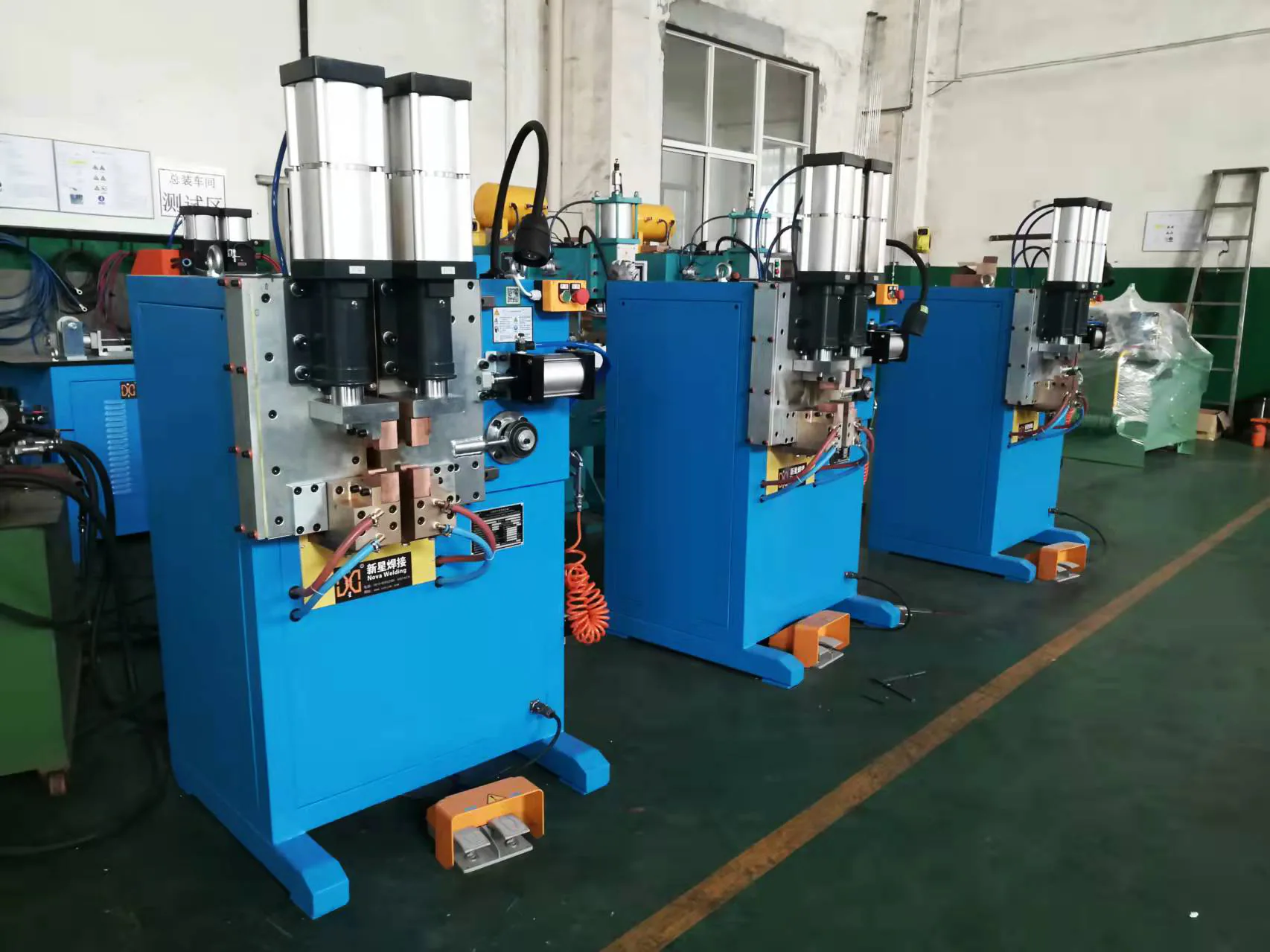
NOVEL WELDER has been engaged in resistance welding machines for 29 years. Its core technical products include: semi-automatic butt welding machine, pneumatic-flash butt welding machine, multi-strand wire welding machine, foot pedal spot welding machine, pneumatic spot welding machine, medium frequency spot welding machine, exhaust Welding machine mesh welding machine, resistance automatic welding machine, energy storage welding machine, copper rod and aluminum rod circular welding machine, auto parts spot welding machine, sheet metal spot welding machine, home appliance hardware spot welding machine, small electrical appliance spot welding machine, copper row copper pipe welding machine, nut spot welding machine,stainless steel welding machine, foil strip spot welding machine, aluminum spot welding machine, multi-head spot welding machine, bag cage spot welding machine, mesh welding machine, ton rack welding production line, resistance automatic welding machine, brazing machine, diffusion welding machine, projection welding machine, seam welding machine, wire and cable optical cable supporting equipment, etc., reaching more than 300 types. If you are interested in our welding equipment, please contact us.